
Why Small Business Owners Are Going Solar in 2026
You know the feeling. You open the power bill, and it's higher than last year. Again. Power rates have gone up for 20 years straight. If you run fridges, AC, or machines all day, energy is one of your biggest costs.
That's the push. Here's the pull. Solar has never been cheaper. Installed prices are down to about $2.50–$3.50 per watt. The government pays 30% of your project through a tax credit. And depreciation lets you write off most of the rest in just 5 years.
We've worked with owners all over the country. The smart ones think of solar a simple way: it locks in your power price. When you make your own power, you've paid for 25+ years of electricity at a fixed cost. Every time the utility raises rates, your decision looks better.
There's also a clock ticking. The 30% tax credit needs construction to start by July 4, 2026. Owners who wait could lose tens of thousands of dollars. More on that below — and in our full tax incentives guide.
How Much Does Solar Cost for a Small Business?
Most small businesses need a system between 10kW and 50kW. Here's what that costs today:
| System Size | Typical Small Business | Cost Before Credits | Cost After 30% Tax Credit |
|---|---|---|---|
| 10 kW | Small shop, small office | $28,000–$35,000 | $19,600–$24,500 |
| 25 kW | Restaurant, salon, small store | $62,500–$87,500 | $43,750–$61,250 |
| 50 kW | Bigger store, small warehouse | $125,000–$175,000 | $87,500–$122,500 |
Those numbers look big. But compare them to what you already spend. A $1,500 monthly bill is $18,000 a year. Over 20 years, that's $360,000 — and that's if rates never rise. They will. Against that, a $50,000 system that kills most of your bill is a great deal.
And remember: the table only counts the federal credit. Depreciation usually saves you another 20–25% in taxes. Many states add their own rebates on top. Your true cost is often about half the sticker price.
How Much Can a Small Business Save?
Let's use a real example. We've seen this story many times.
Example: a restaurant with a $1,500 monthly power bill.
- Power costs per year: $18,000
- System size to cover ~70% of usage: about 30 kW
- Cost at $3.00 per watt: $90,000
- Federal tax credit (30%): −$27,000
- Tax savings from depreciation (approx.): −$18,000
- Real cost after tax perks: about $45,000
- Savings per year: about $12,600
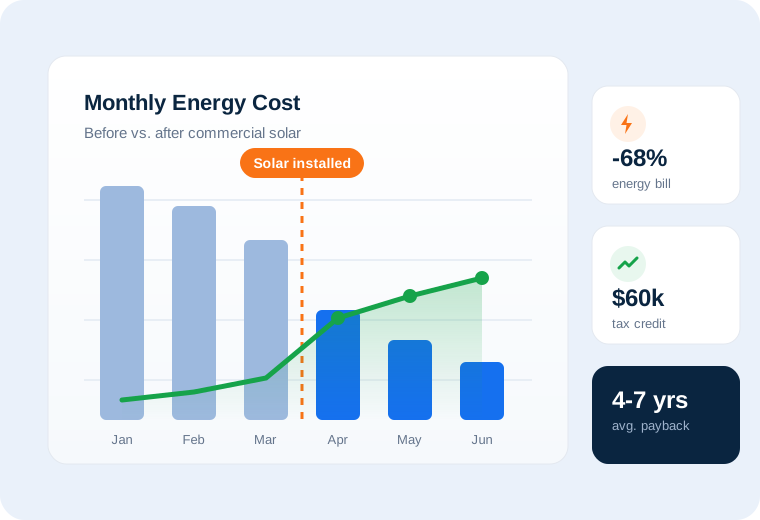
- Pays for itself in roughly 3.5–5 years
After payback, that restaurant keeps about $12,000+ every year. That money drops straight to the bottom line. For 20 more years. For a business with thin margins, that's like adding free revenue every single year.
Your numbers will differ. Sunny states make more power. States with pricey electricity save more per unit. The only way to know your real number is a custom quote. That's exactly what our free quote service gives you.
The 30% Small Business Solar Tax Credit Explained
The federal Investment Tax Credit (ITC) gives you back 30% of your total solar cost. Equipment, labor, permits — everything counts. And it's a credit, not a deduction. It cuts your tax bill dollar for dollar.
Three things every owner should know:
- The deadline is real. Construction must start by July 4, 2026 to get the full 30%. "Starting" means real physical work, or spending at least 5% of the project cost. After the deadline, the credit is gone.
- It stacks with depreciation. MACRS lets you write off the system over 5 years. Together, the two perks usually cover 45–60% of your cost.
- You need a tax bill to use it. The credit cuts taxes you owe. If your credit is bigger than your tax bill, you can usually carry the rest forward. Ask your accountant early — not after you sign.
We cover the forms and steps in our full solar tax incentives guide.
Solar Financing Options for Small Businesses
You don't need $90,000 in the bank. There are four ways to pay. Here are the honest pros and cons of each:
- Pay cash. The biggest lifetime savings and the fastest payback (4–7 years). You own the system and get all the tax perks. The catch? It ties up money you might need elsewhere.
- Solar loan. The most popular choice. $0 down. You still own the system and get the tax credit. In most cases, your loan payment is less than your old power bill. So you're ahead from month one. Loans usually run 7–15 years.
- Solar lease. A company owns the system on your roof. You pay a fixed monthly fee that's lower than your current bill. Less paperwork, no maintenance. But the company keeps the tax credit, so you save less over time.
- Power purchase agreement (PPA). Like a lease, but you pay per unit of power at a discount. Zero cost up front, zero maintenance. The company keeps the tax perks. Best for businesses that don't owe much tax.
Our take after watching hundreds of these choices: if your business pays steady taxes, owning (cash or loan) almost always wins. If not, a PPA still saves you money with zero risk.
Is Solar Right for Your Small Business?
Solar is a great fit for most small businesses — but not all. Run through this quick checklist:
- Your monthly power bill is $500 or more (bigger bills = better math)
- You own your building, or your landlord is open to a deal
- Your roof is in good shape with 10+ years of life left (or you have land or parking space)
- Your roof gets decent sun (south-facing is best, but east and west work too)
- Your business owes federal taxes (or you're open to a PPA)
- You plan to stay in the building 5+ years
Checked most boxes? You're a strong fit. Missed one or two? Don't count yourself out. Installers solve roof, shade, and landlord problems every day. A free quote costs nothing and gives you a clear answer.
How to Get Started: The Simple 3-Step Process
- Ask for your free quote. Fill out our 60-second form. We just need your business type, address, and average monthly bill.
- Talk to matched installers. We connect you with up to three licensed, insured installers near you. They'll review your real power bills and size a system for you.
- Compare quotes and decide. Look at prices, warranties, and payment plans side by side. Pick the best offer — or none at all. There's never any pressure.
Frequently Asked Questions for Small Business Solar
Can a small business really afford solar panels?
Yes. The 30% federal tax credit cuts the price a lot. Depreciation cuts it more. And $0-down solar loans mean you may not need cash up front. For many businesses, the loan payment is smaller than the old power bill. That means you save money from month one.
How big a system does a small business need?
Most small businesses install systems between 10kW and 50kW. A rough rule: every $100 of monthly power bill needs about 7-10kW of solar. This varies by state. An installer will size your system using a year of your real power bills.
What if my small business rents its building?
You still have options. Many renters work out a deal with their landlord. The landlord adds solar and shares the savings. Community solar is another path. You join a shared solar farm and save on your bill. No rooftop needed.
How long until a small business solar system pays for itself?
Most small business systems pay for themselves in 4-7 years after incentives. Panels are under warranty for 25 years. So after payback, you get about two decades of nearly free power.
Will solar panels raise my property value?
Usually, yes. A building with solar costs less to run. Lower costs mean higher value when the building is priced. Appraisers look at operating costs when they value business property.
Find Out What Solar Would Save Your Business
Thousands of small business owners have already checked their numbers. It's free, it's fast, and there's no pressure. With the July 2026 tax deadline coming, now is the time to look.
Get My Free Solar QuoteA quick note: GoSolarBusiness.com is not a solar installer or tax advisor. Savings depend on your location, system size, and power use. Always check tax credit details with a tax professional.